Sunlite
A safe social app for teenagers: find friends by shared interests, read about psychology, reach a helpline. Won the UPSHIFT program run with UNICEF in Belarus and a development grant.
Closed source
git clone sunliteAccess denied: the repository is private.Ask me for a demoThe problem
Sunlite helps teenagers find people who think alike and start a conversation, in a place built around their mental well-being. It grew from a school psychology class into a project at UPSHIFT, a social design program run with UNICEF in Belarus.
How it works
A teen fills in a profile with interests, music, films and photos and picks one of five mascots; matching uses all of it, and two people with the same mascot can start talking. The app also has a psychology section with articles and tests, and a screen with Belarusian helplines.
What I did
Founder, team lead and the only developer. I built all 38 pages in FlutterFlow on Firebase, the data model and a Google Sheets pipeline for the content authors, and led our team of five students, teaching them to use AI tools.
Status
Won the UPSHIFT program in 2024 with a development grant and was covered by Belarusian media. The app reached a working prototype but never launched publicly, because the company running the program ran into organizational problems.
- Role
- Founder, team lead and lead developer
- Period
- Mar 2024 – Jul 2025
- Status
- Archived
- Stack
- FlutterFlow, Flutter, Firebase, Rive, BlurHash, Google Sheets automation, Google Drive
Key features
- A detailed profile with interests, music, films and photos, used to match people who think alike
- Five mascot characters: two people with the same mascot can like each other and start talking
- A psychology section with longreads, tests and real cases about anxiety and stress
- Contacts of support lines in Belarus for anyone who needs help right now
- Content managed from a Google Sheet, so authors never touch the app
What are you into?
People with your interests Your mascot
- Masha, 15Music, Books, Drawing2 shared
- Lina, 14Drawing, Films, MusicSame mascot as you: you can like each other1 shared
- Dima, 15Books, Games1 shared
- Artyom, 16Games, Sport, Films0 shared
You got:
In the app, the wheel then locks until its timer runs out.
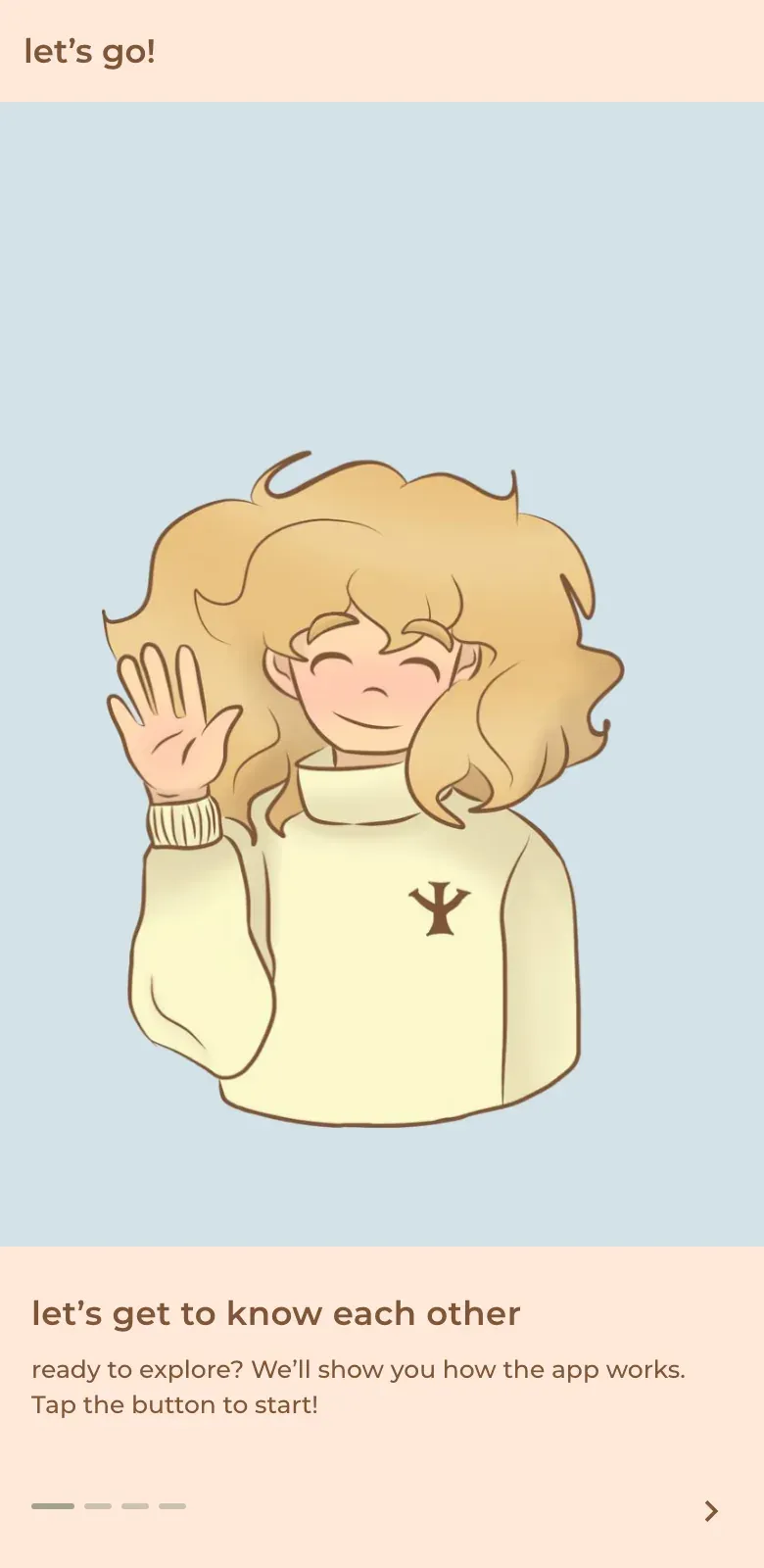
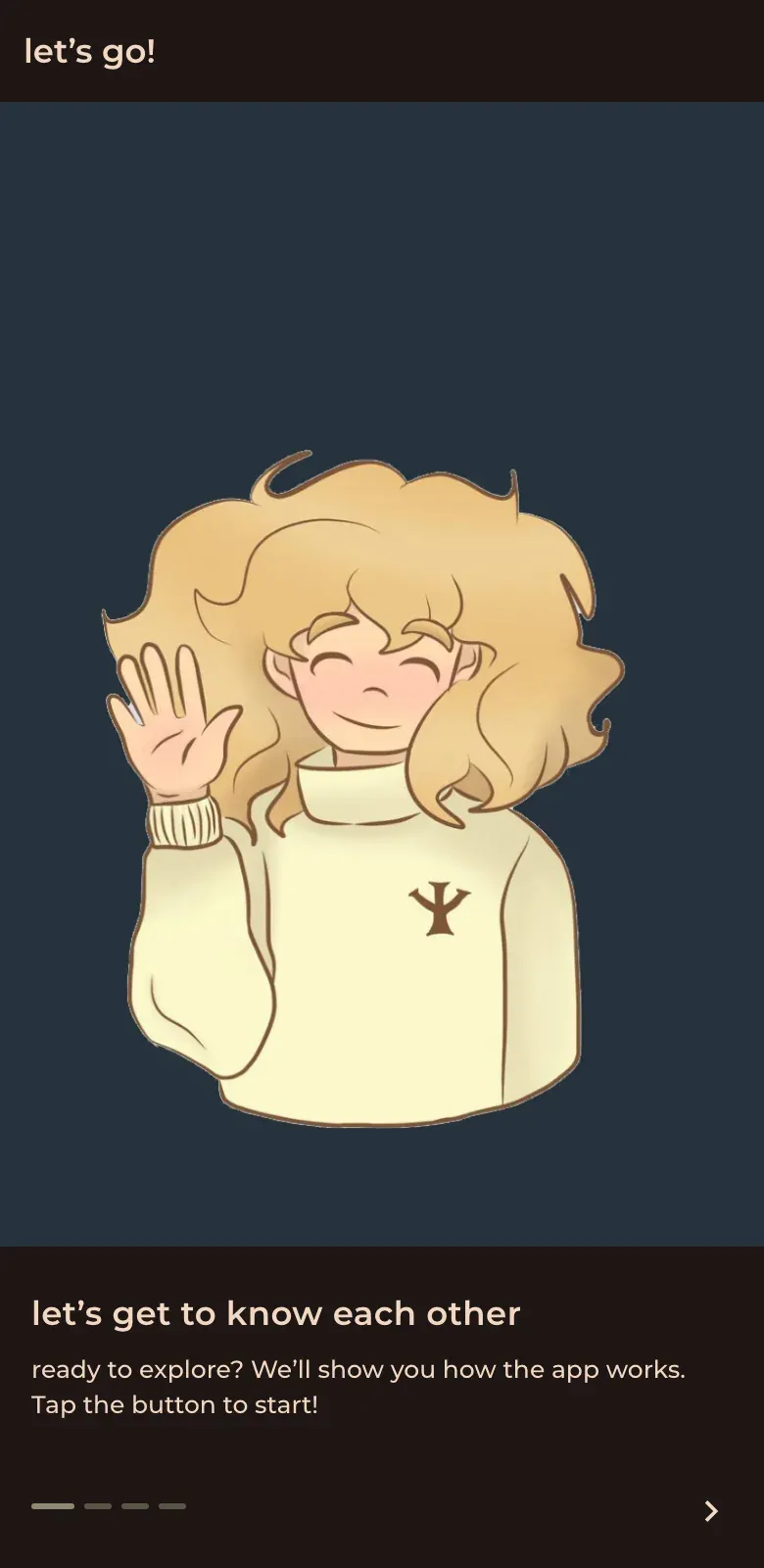
Onboarding: one of the five mascots greets a new user and starts the introduction.
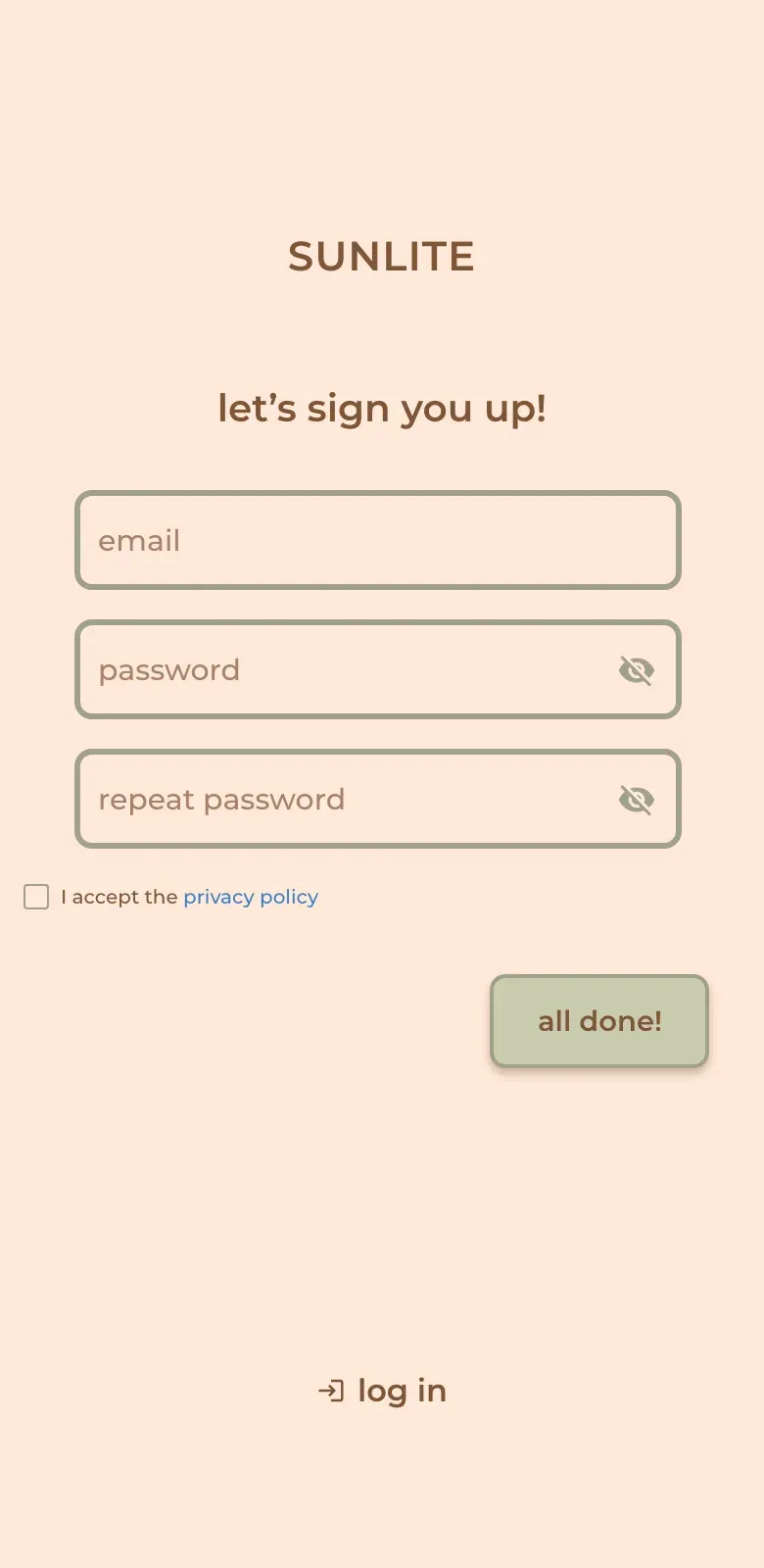
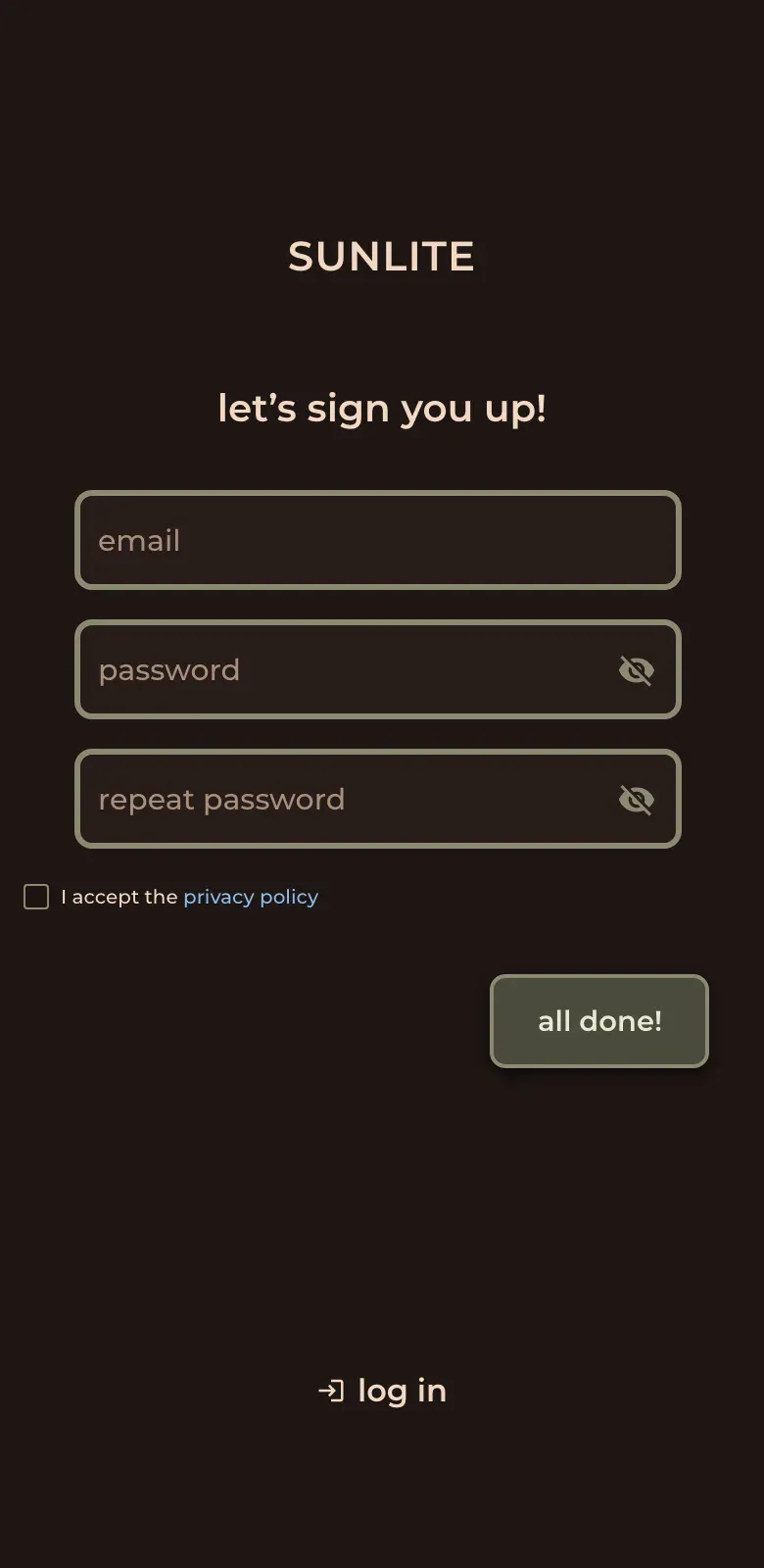
Sign-up: email and password, a privacy policy checkbox, and a link to log in instead.
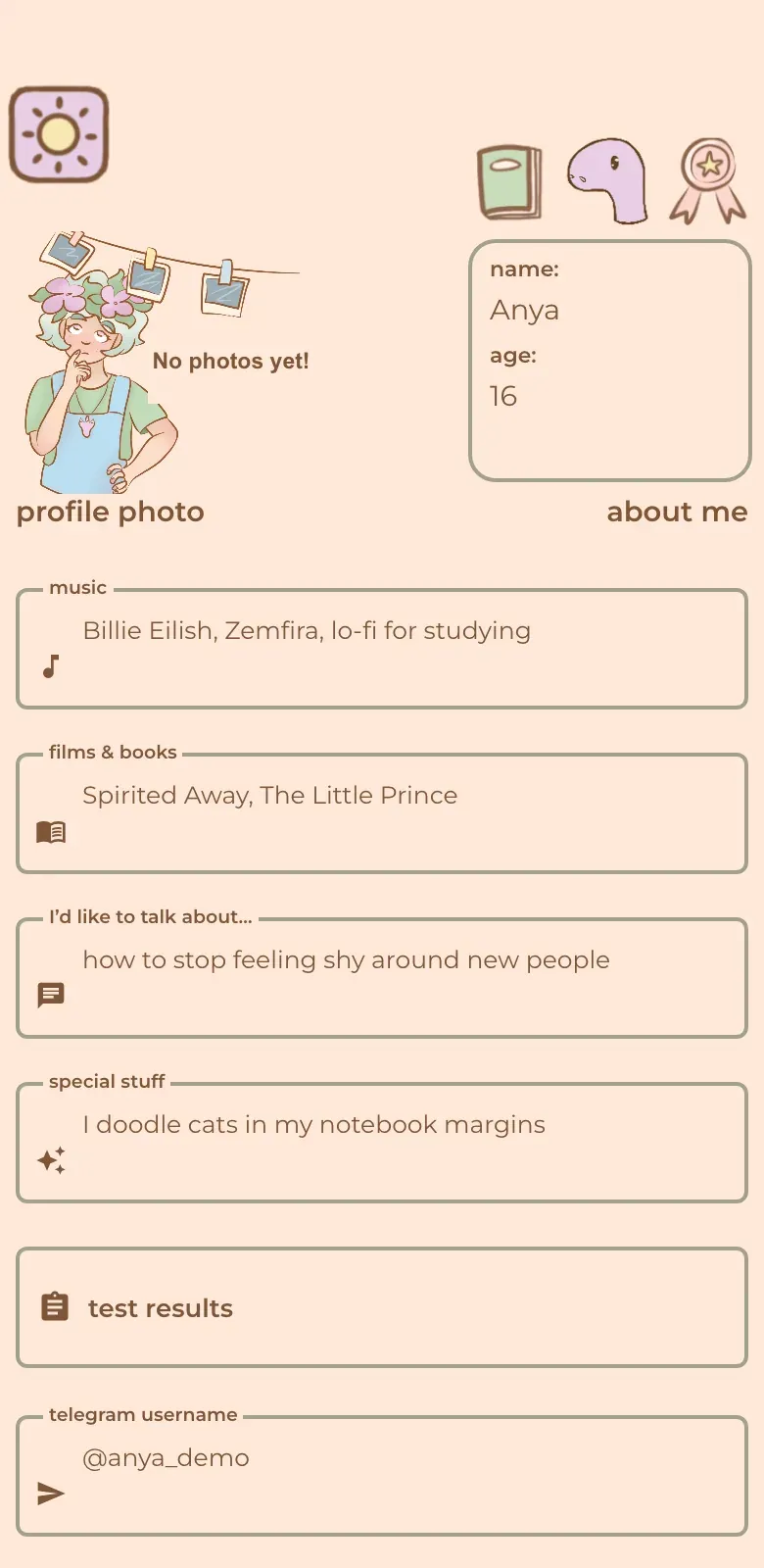
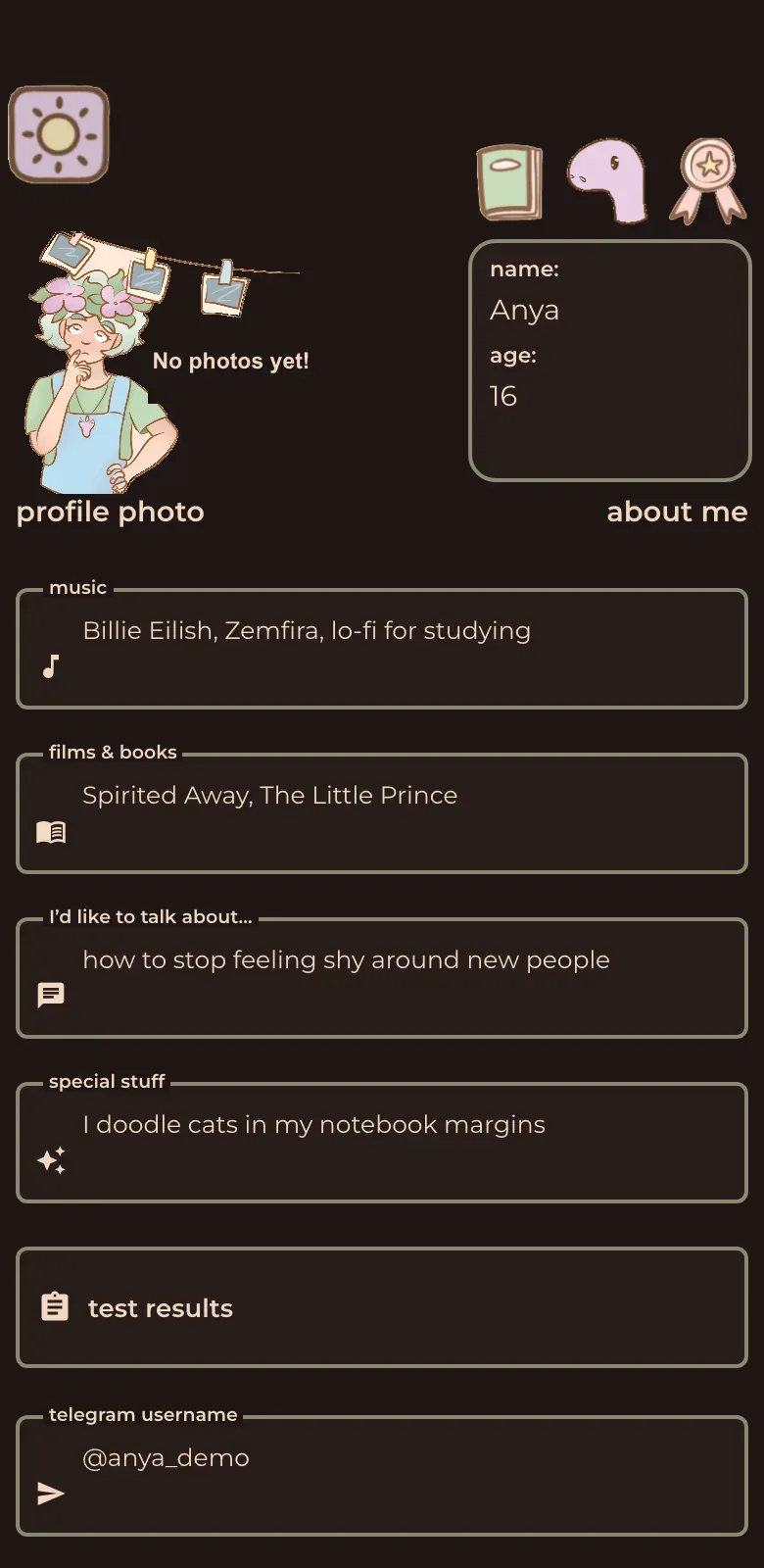
Your profile: music, films and books, what you want to talk about and your test results. The data is a made-up sample.
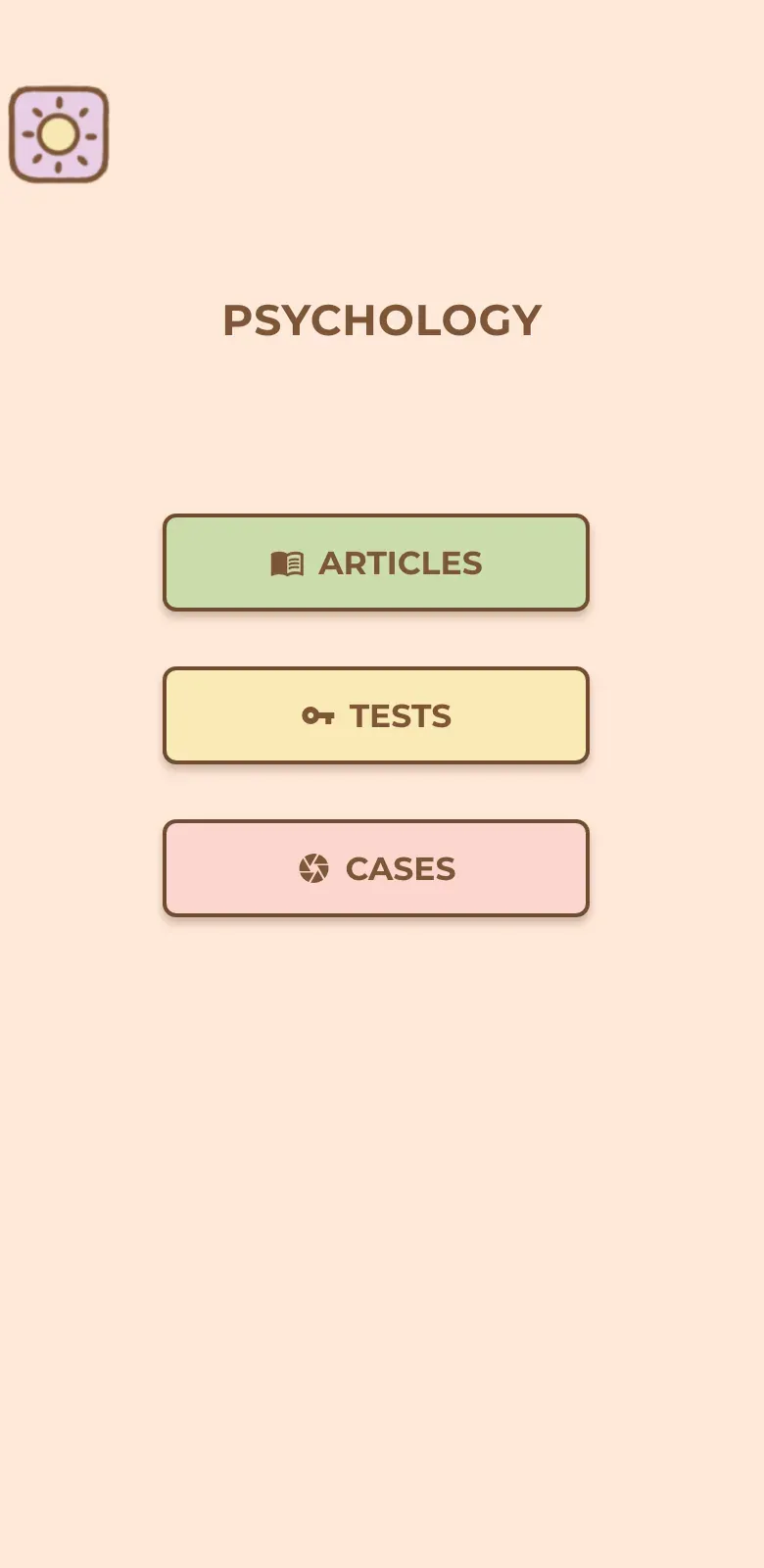
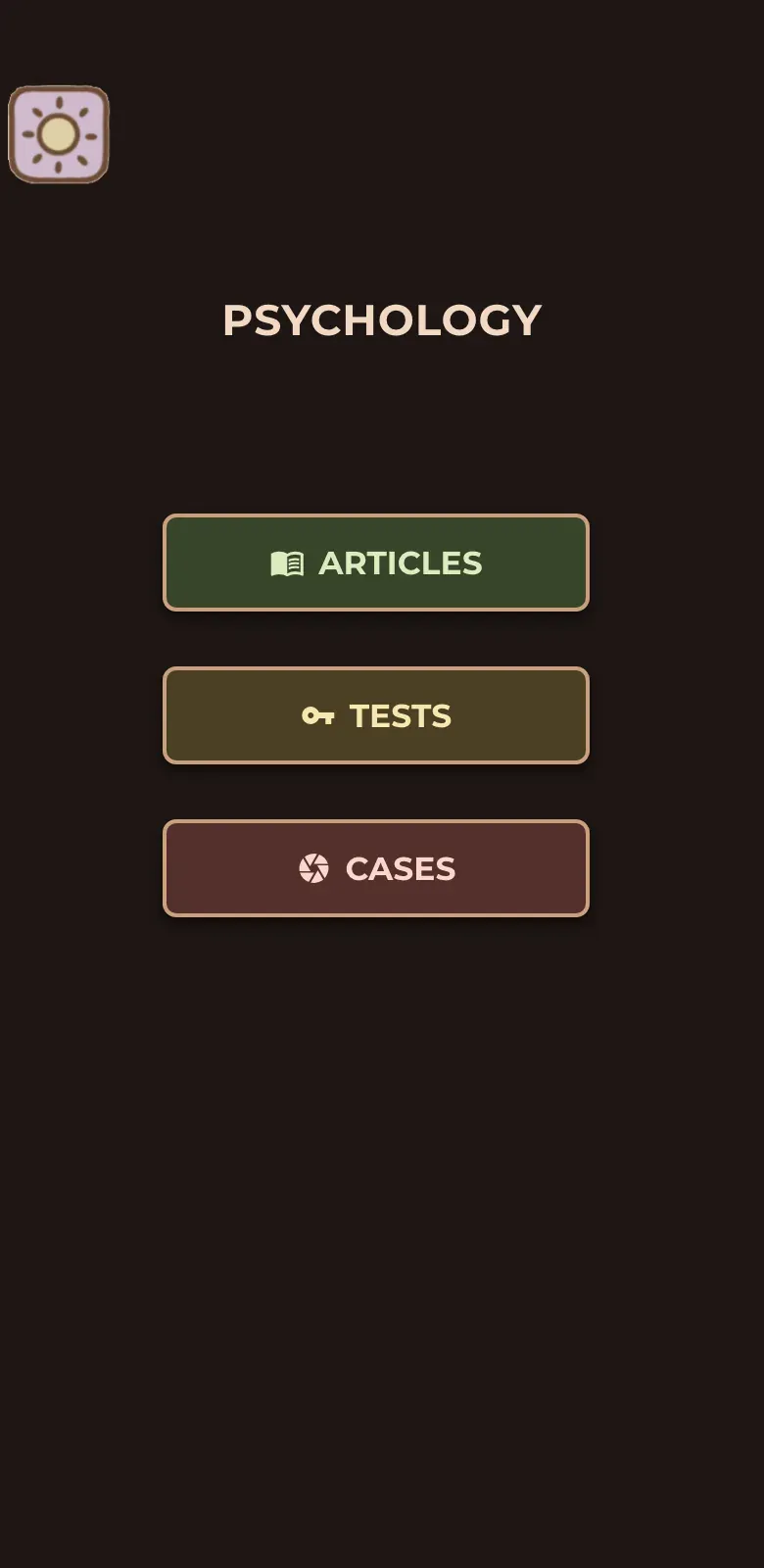
The psychology section: articles, tests and real cases.
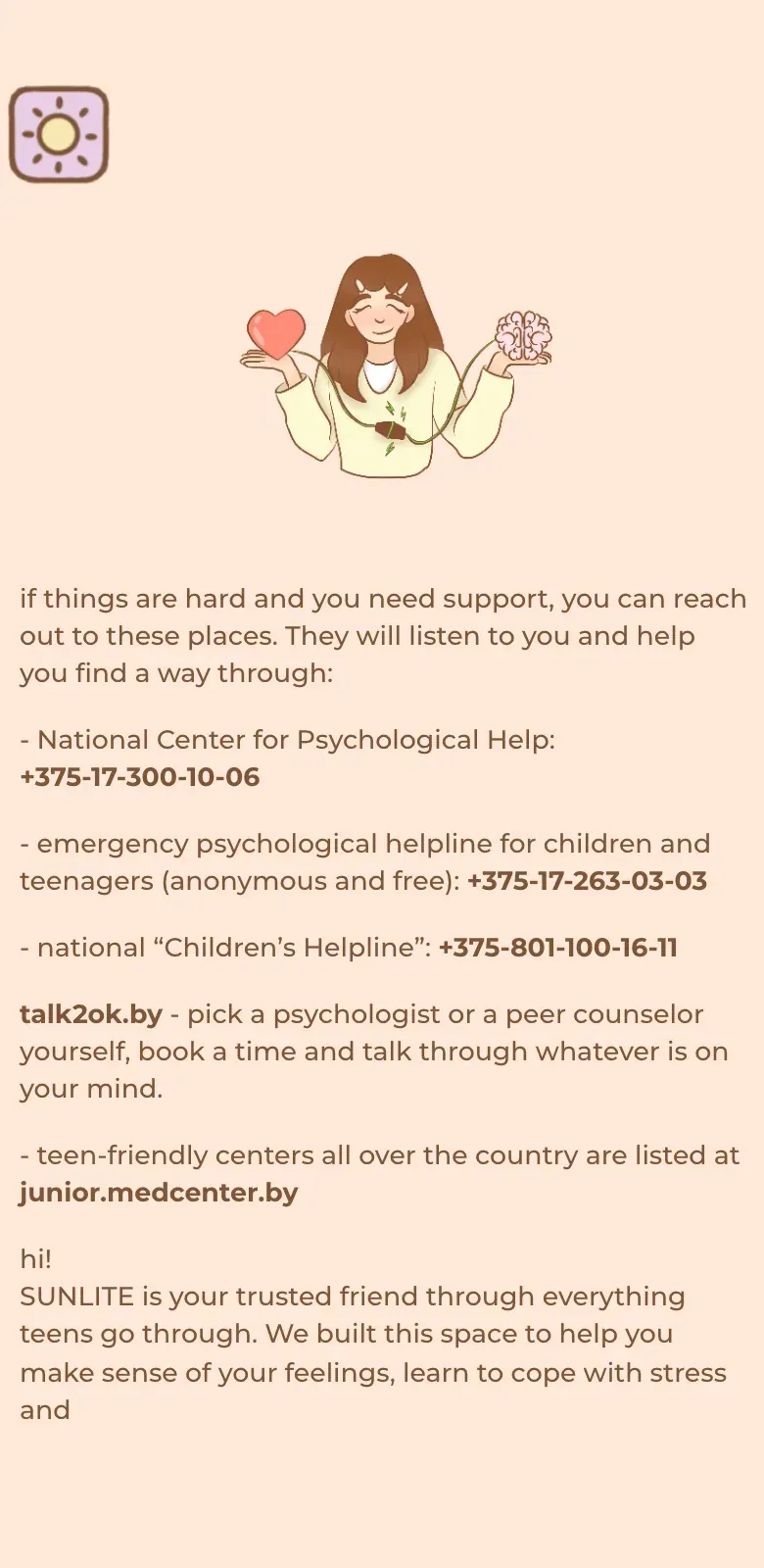
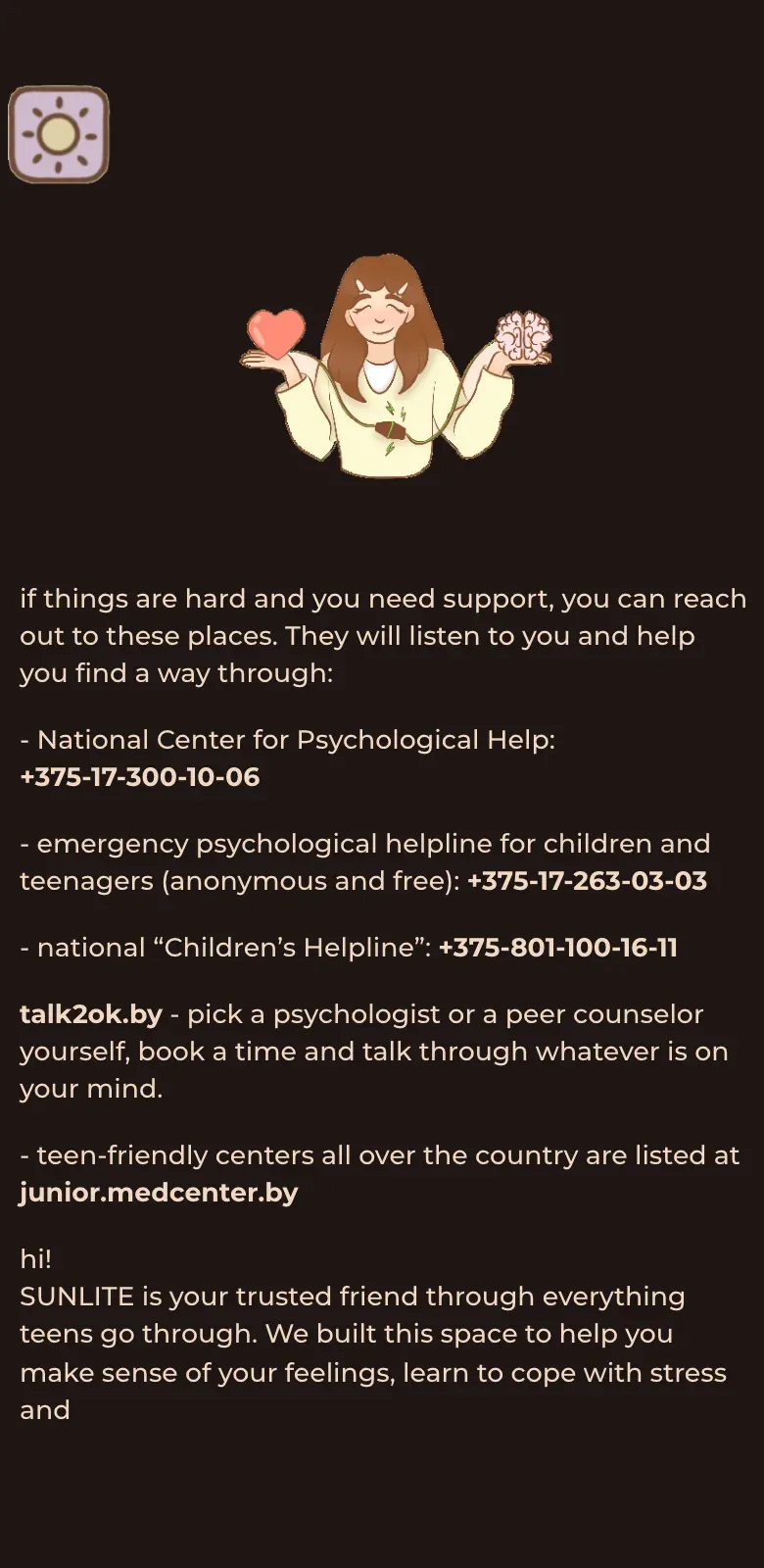
Help and support: Belarusian helplines, talk2ok.by for booking a psychologist, and junior.medcenter.by for teen-friendly centres.
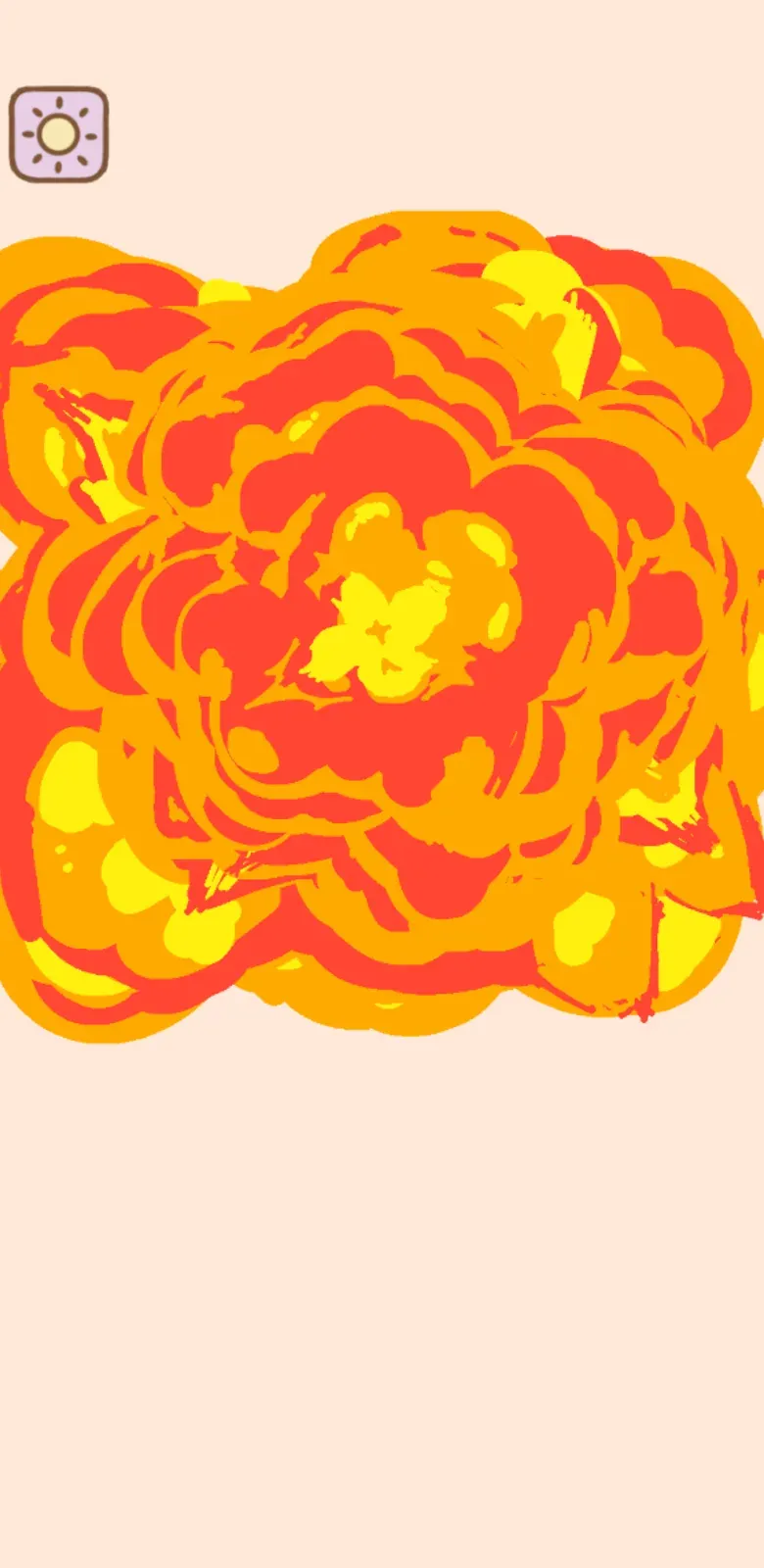
The Trouble Destroyer: you type what bothers you, and an explosion destroys it.
1 / 6 Onboarding: one of the five mascots greets a new user and starts the introduction.
What it is
Sunlite is a mobile app for teenagers that helps them find people who think alike and learn how to start a conversation, in a place built around their mental well-being. The idea came from our team of five students at a Minsk gymnasium, who met at an optional psychology class, and grew into a project at UPSHIFT, a national social design program run by the Belarusian State Pedagogical University with UNICEF in Belarus. The 2024 theme was psychological well-being.
A new user signs up, meets the app through a short onboarding and fills in a profile: name, interests, favorite films and music, and photos, with the main photo required. Matching uses all of it. Each user also picks one of five mascot characters, each with its own style; two people with the same mascot can like each other and start talking, even if nothing else matches.
Beyond profiles, the app has a psychology section with longreads, tests and real cases about anxiety and stress, prepared by the team’s content authors and researchers. A help screen lists support lines in Belarus for anyone who needs help right now. Two lighter pages round it out: the Trouble Destroyer, where you type what bothers you and watch an explosion destroy it, and a fortune wheel you can spin again once its timer runs out.
What I built
The whole app, as the only developer, in FlutterFlow on Firebase: 38 pages (4 for sign-in and registration, 15 for your own profile, 9 for viewing other people’s profiles, 7 for psychology, plus the Trouble Destroyer, the fortune wheel and an info page), most of the screens, all of the logic, the data model for profiles, mascots, articles and cases, and the tools the rest of the team worked with. I also led the team, planned the work and taught my teammates to use AI tools in their part of it.
Onboarding: one of the five mascots greets a new user and starts the introduction.
Sign-up: email and password, a privacy policy checkbox, and a link to log in instead.
Your profile: music, films and books, what you want to talk about and your test results. The data is a made-up sample.
The psychology section: articles, tests and real cases.
Help and support: Belarusian helplines, talk2ok.by for booking a psychologist, and junior.medcenter.by for teen-friendly centres.
The Trouble Destroyer: you type what bothers you, and an explosion destroys it.
1 / 6 Onboarding: one of the five mascots greets a new user and starts the introduction.
Technical highlights
- Caching on several levels for profiles, mascots, articles and cases, to cut repeated database reads.
- BlurHash placeholders show an image’s colors before it loads.
- Rive animations. Interactive micro-animations are made in Rive; the project went through two sets of them in 2025.
- Custom media loading through a stack of widgets that handles raw bytes, database paths and default fallbacks.
- Profile validation: a main photo is required and extra photos are optional.
- Content pipeline for non-developers. An author types an article title into a Google Sheet, a document is created in Google Drive, its link lands in the sheet, and the text and images sync back into the app. This took manual file handling off the content team.
Result
The team won the UPSHIFT program and received a grant to develop the app, with an “UpShift: Mental Health” certificate in 2024. Sunlite was covered by Belarusian media, for example SB.by, Minsk News, the Minsk city portal and ProDetok, and in a TNT International segment. The app reached a working prototype but never launched publicly, because the company running the program, not UNICEF, ran into organizational problems. The screenshots recreate the prototype’s screens from its original layout and illustrations: the text is re-typeset in English and Russian, the profile holds made-up sample data, and the dark versions use a dark theme I derived from the app’s own palette. The prototype itself had only a light theme in Russian.
My role
Founder, team lead and the only developer. I built the app, organized a team of an illustrator, content authors and researchers, and taught them to use AI tools. The illustrations, articles, research and pitch were my teammates’ work.