Universal: Hyperjump
An idle clicker made at a game dev hackathon: a lone ship scavenges space junk, grows its modules and saves up for the jump home. Won the Best gameplay award.
The problem
Made at a game dev hackathon in April 2026: a complete mobile game by a team of three, from the first idea to a playable Android build.
How it works
Tap passing debris to collect metal, buy modules and place them on the ship's grid: collectors, reactors, hull plates and turrets. Raiders attack in waves, turrets fire on their own, and the goal is to store enough power for the final hyperjump home.
What I did
Lead developer with the most commits in the repository. The game is built in Godot around a global signal bus and small reusable components, with balance kept in config files and a shared mechanics document for the team.
Status
Won the Best gameplay award. A playable Android build is in the repository's releases, and the team published a final version in the summer.
- Role
- Lead developer, top contributor by commits
- Team
- Roman Rynda, Lead developer
- OrDinaD, Developer
- AlexBonk1, Developer
- Period
- Apr 2026
- Status
- Released
- Stack
- Godot Engine, GDScript, Android
Key features
- Tap passing debris to collect metal, then spend it on new ship modules
- Build the ship on a grid: core, hull, collectors, reactors and turrets
- Raider waves attack the ship; turrets aim and fire on their own
- A tutorial led by the ship's AI companion, N.A.D.Y.A.
- Playable Android build in the repository's releases
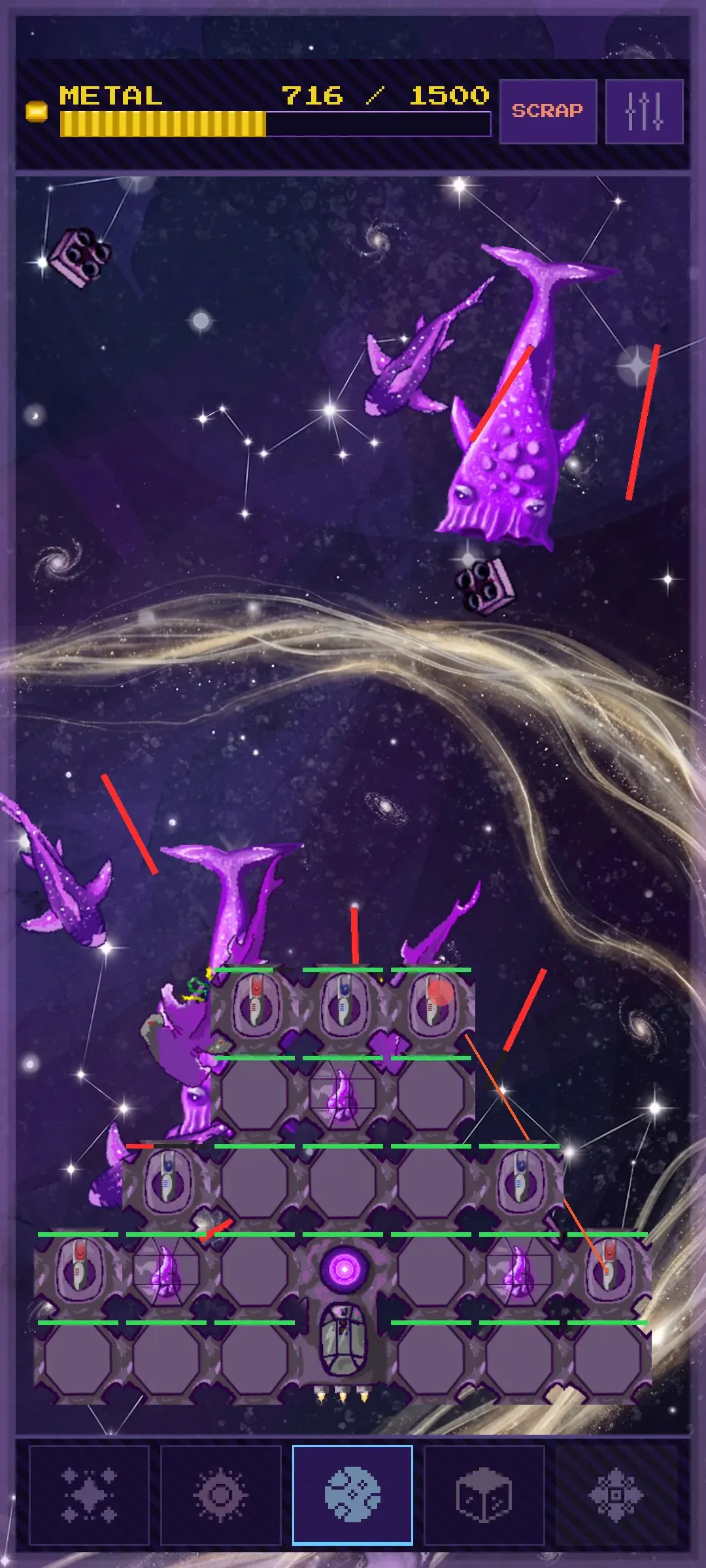
Mid-game: raiders swarm the ship and the turrets fire on their own. The game ships in Russian; the English screen text here is a translation made for this site.
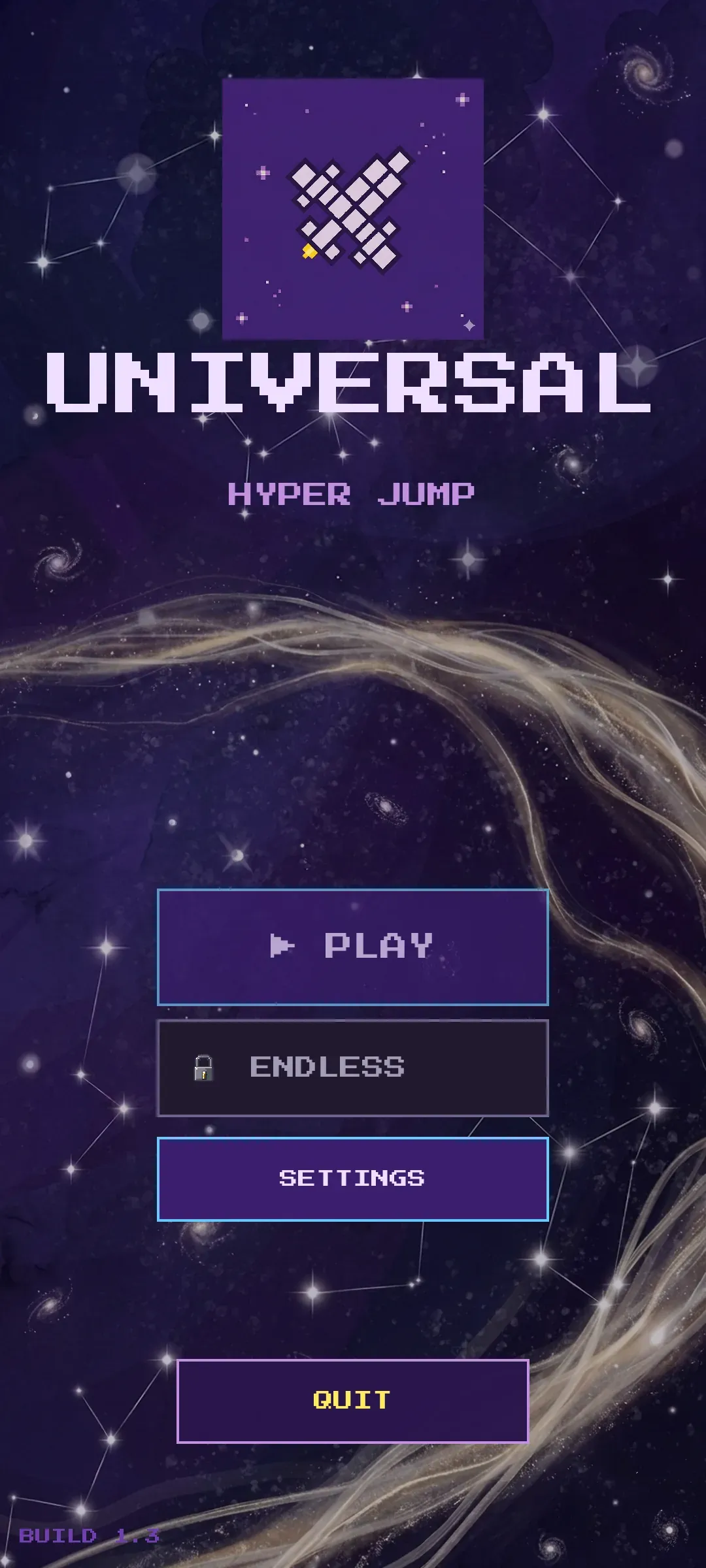
The start menu, in the portrait layout made for phones. Endless mode unlocks after the first win.
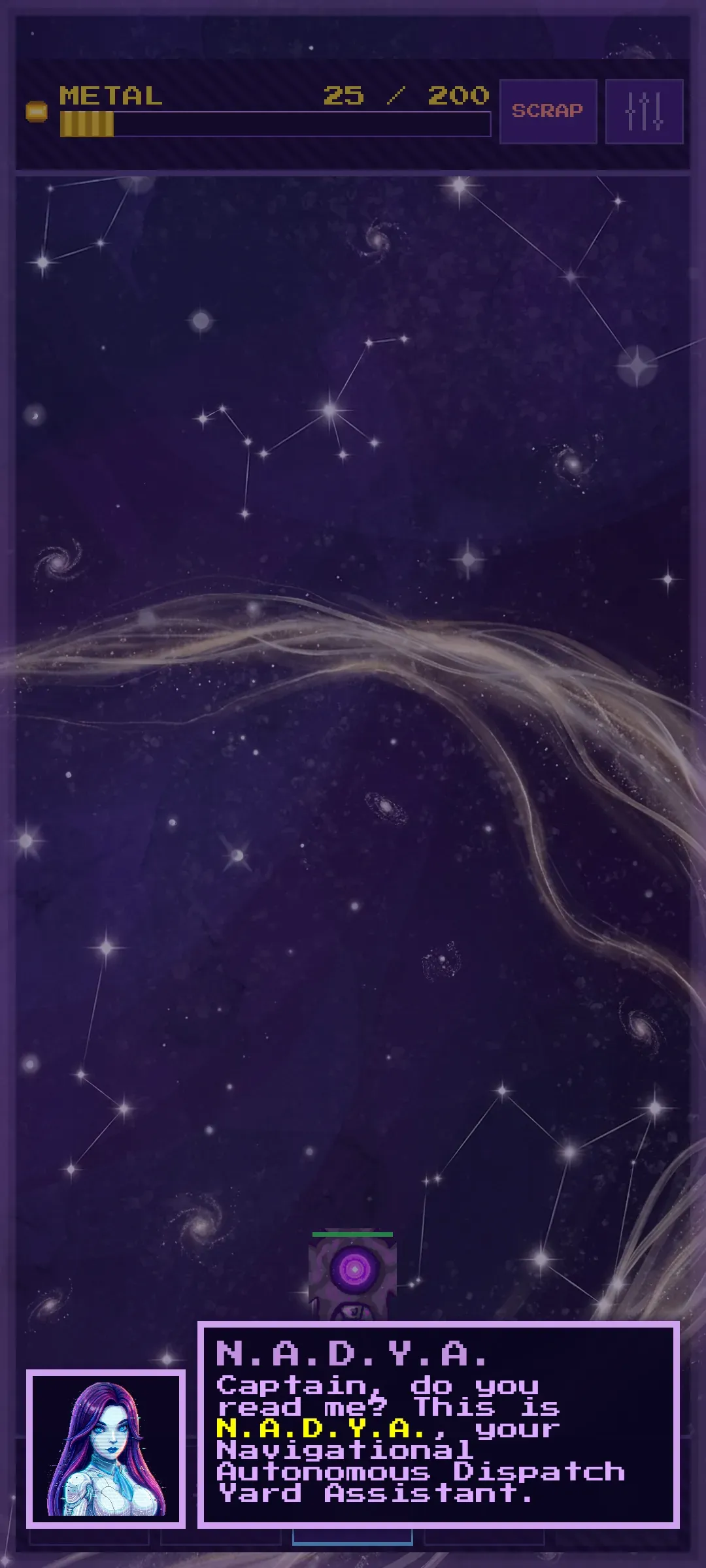
A new run starts with N.A.D.Y.A., the ship's AI, explaining what to do.
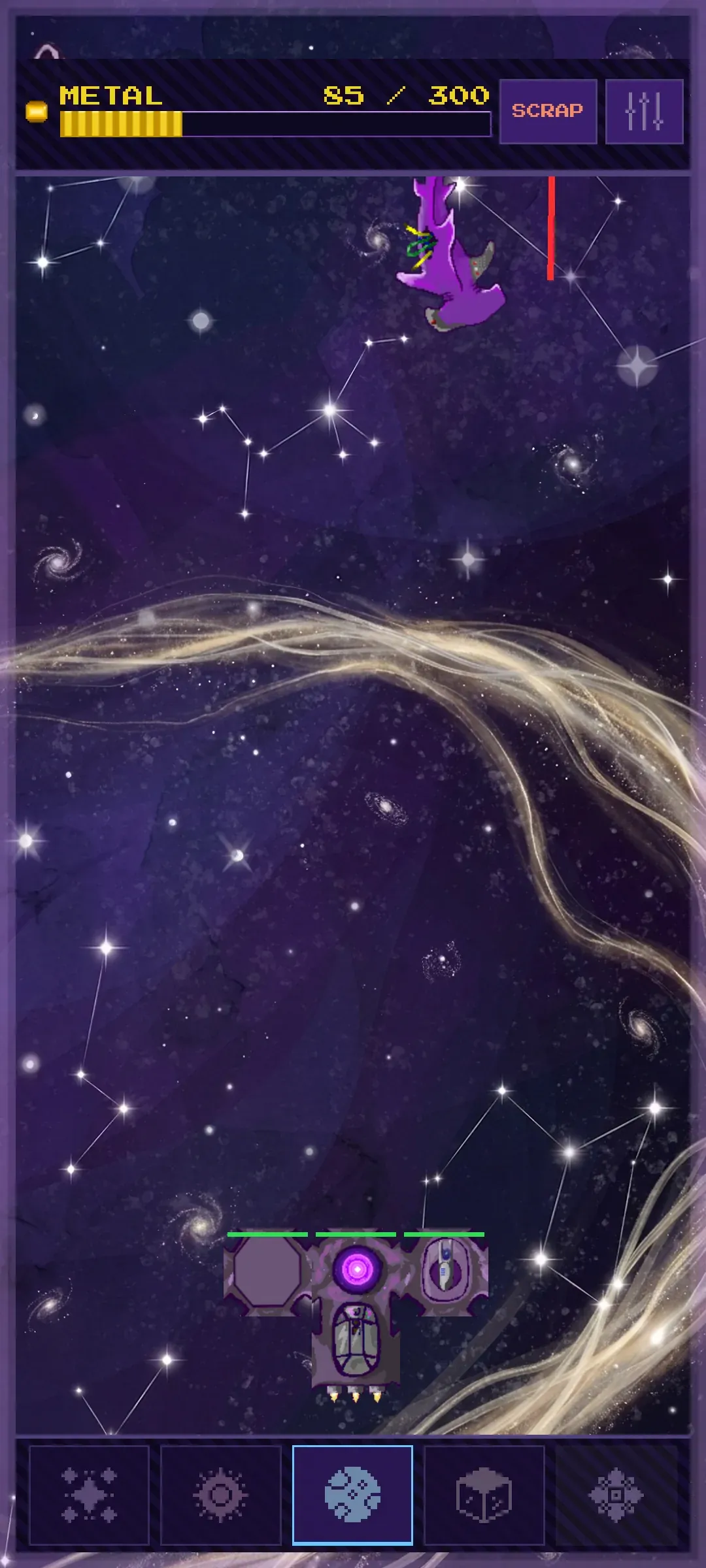
Early in a run: the core with its first modules, junk to tap for metal and the first raider.
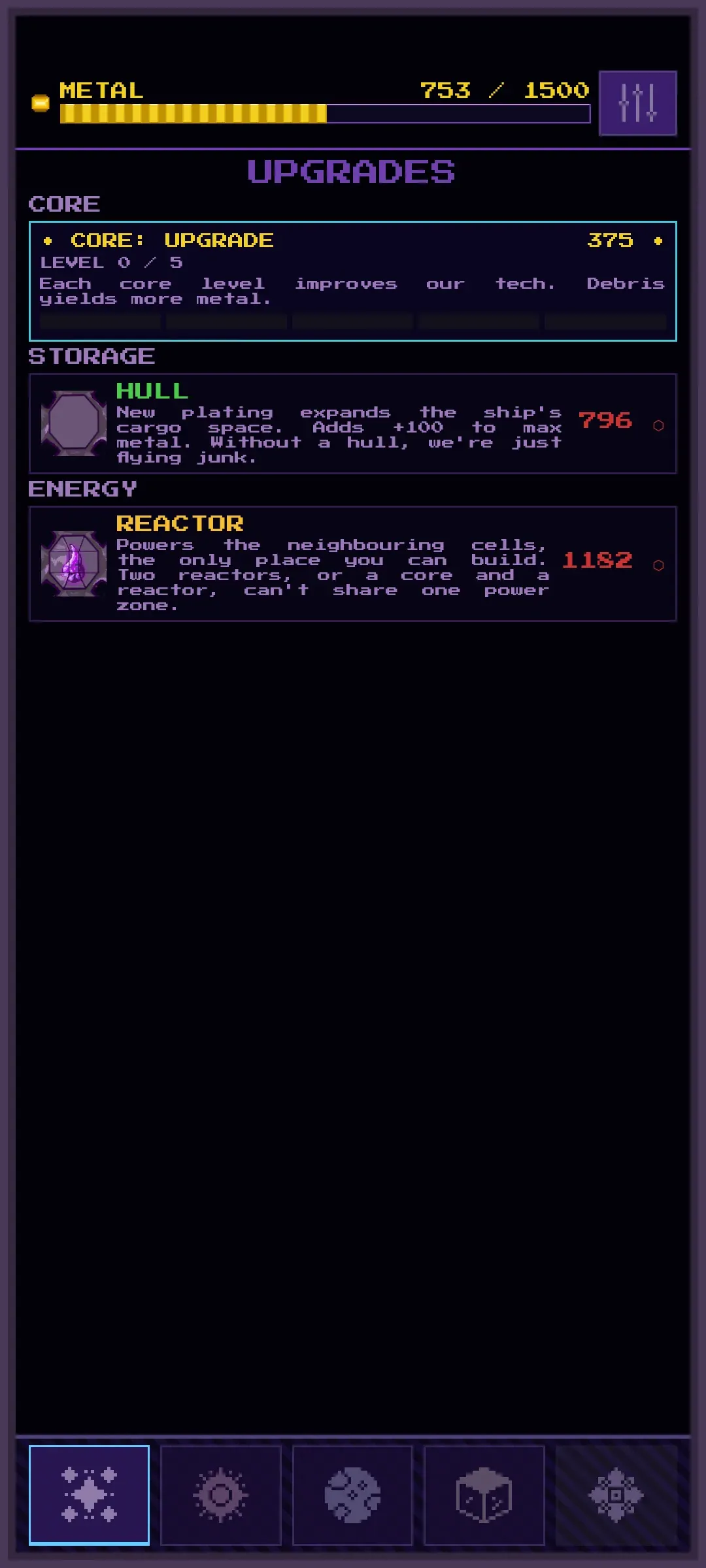
The upgrades bay: level up the core or buy hull plates and reactors, then place them on the ship's grid.
1 / 5 Mid-game: raiders swarm the ship and the turrets fire on their own. The game ships in Russian; the English screen text here is a translation made for this site.
What it is
“Universal: Hyperjump – Scavenging the Void” is an idle clicker about a lonely ship in an unfriendly galaxy. Junk drifts past, and you tap it to collect metal. Metal buys new modules, which you place on the ship’s grid: collectors that gather on their own, reactors, hull plates and turrets. Raiders arrive in waves and shoot at the modules, so the ship has to defend itself while it grows. The goal is to store enough power for the final hyperjump home.
The game is built for phones in portrait mode and runs on Android.
What I built
A complete game in a hackathon time frame, made by a team of three, with a playable Android build in the repository’s releases. I led development and made the most commits in the repository.
Mid-game: raiders swarm the ship and the turrets fire on their own. The game ships in Russian; the English screen text here is a translation made for this site.
The start menu, in the portrait layout made for phones. Endless mode unlocks after the first win.
A new run starts with N.A.D.Y.A., the ship's AI, explaining what to do.
Early in a run: the core with its first modules, junk to tap for metal and the first raider.
The upgrades bay: level up the core or buy hull plates and reactors, then place them on the ship's grid.
1 / 5 Mid-game: raiders swarm the ship and the turrets fire on their own. The game ships in Russian; the English screen text here is a translation made for this site.
Technical highlights
- Event bus on signals. Modules talk only through a global
GameEventssignal bus: debris collected, a resource balance changed, a module built or destroyed. No module holds a direct reference to another, so a collector never updates the UI by itself. - Composition over inheritance. Behavior comes from small reusable components such as health, clickable, resource generator, turret targeting and heat management, instead of deep class trees.
- Data-driven balance. Module prices, turret stats, core upgrades and raider waves live in separate config scripts, so balance can change without touching game logic.
- Feature folders. Each feature keeps its scene, script and sprites together.
- Shared rules for the team. A mechanics document in the repository explains the architecture and the main game loops, so all three of us built against the same rules.
Result
The game won the Best gameplay award at a game dev hackathon in April 2026 (event page). After the event the team kept polishing it and published a final version in the summer.
My role
Lead developer in a team of three, with the most commits in the repository. Teammates: OrDinaD and AlexBonk1.